Professional cooking oil pickup keeps your kitchen efficient. Learn how scheduled collection works and why it matters for restaurant operations.
Running a commercial kitchen means dealing with used cooking oil constantly. You need it picked up on schedule, handled professionally, and removed without disrupting your workflow. Perfect Solution Grease Recyclers specializes in exactly this: dependable cooking oil pickup that fits your kitchen’s actual volume and rhythm.
Here’s what you need to know about setting up reliable oil collection for your restaurant or food service operation.
Related: Cooking Oil Recycling Service Near Me in Texas
Related: San Antonio Used Cooking Oil Removal & Recycling Guide
Related: Used Cooking Oil Pickup for Texas Restaurants: Complete Guide
Related: Used Cooking Oil Pickup for Food Trucks in Texas
Related: Schedule a Used Cooking Oil Pickup in Texas: Your Complete Guide
Related: Used Cooking Oil Pickup Schedule Options in Texas
Related: Restaurant Oil Pickup Service in San Antonio: Complete Guide
Related: Commercial Fryer Oil Pickup in San Antonio: Complete Guide
Why Dependable Cooking Oil Pickup Matters
Used cooking oil doesn’t just sit in a corner and wait. It fills up fast. When your storage containers overflow or your disposal schedule gets bumpy, you’re looking at messy spills, safety hazards, and operational headaches that cost you time and money.
A dependable pickup service transforms oil disposal from a constant worry into a seamless part of your day. Your containers get emptied on time. Your kitchen stays clean. You’re not scrambling for emergency solutions. That consistency lets you focus on what actually makes you money: cooking great food and serving customers.
Beyond convenience, professional pickup means you’re also getting paid for your used oil instead of just throwing it away. That’s real money coming back to your business every month.
How to Calculate Your Oil Production Volume
Before you call anyone, figure out how much oil your kitchen actually generates each week. This is the critical first step.
Track your oil usage for one full week. Write down how many fryers you run, how often they’re used, and how long oil typically lasts before you change it out. Are you a high-volume breakfast and lunch spot, or do you do steady dinner service? Does your menu have heavy fried items, or just a few?
This data matters because it determines the right pickup schedule for your operation. A small café might need pickup every two weeks. A busy steakhouse might need it twice a week. Getting this wrong means either overstuffed containers or wasted service calls.
Once you know your weekly volume, you can request appropriately-sized storage containers and pricing that actually matches your needs instead of guessing.
Flexible Scheduling Options That Fit Your Kitchen
Professional oil pickup isn’t one-size-fits-all. Most service providers offer weekly, biweekly, or custom schedules based on your specific kitchen’s oil production.
Weekly pickup works great if you’re running high-volume fryers or your space is tight and you can’t store multiple containers. You get consistent service and never worry about overflow.
Biweekly pickup is common for mid-sized restaurants with moderate frying. It’s cost-effective and gives you a predictable rhythm without over-servicing.
Custom schedules matter too. If your oil production is uneven (maybe you do twice as much fried food on weekends), a good provider will work with you to adjust the schedule. That’s where the difference between a massive corporate waste company and a hands-on local operation really shows.
Perfect Solution Grease Recyclers works across Texas with delivery, installation, and customized pickup schedules tailored to your kitchen’s actual volume and operational needs.
What to Expect From Professional Collection
Here’s the practical side of how a professional collection service works.
Related: Cooking Oil Collection Frequency for Busy Kitchens
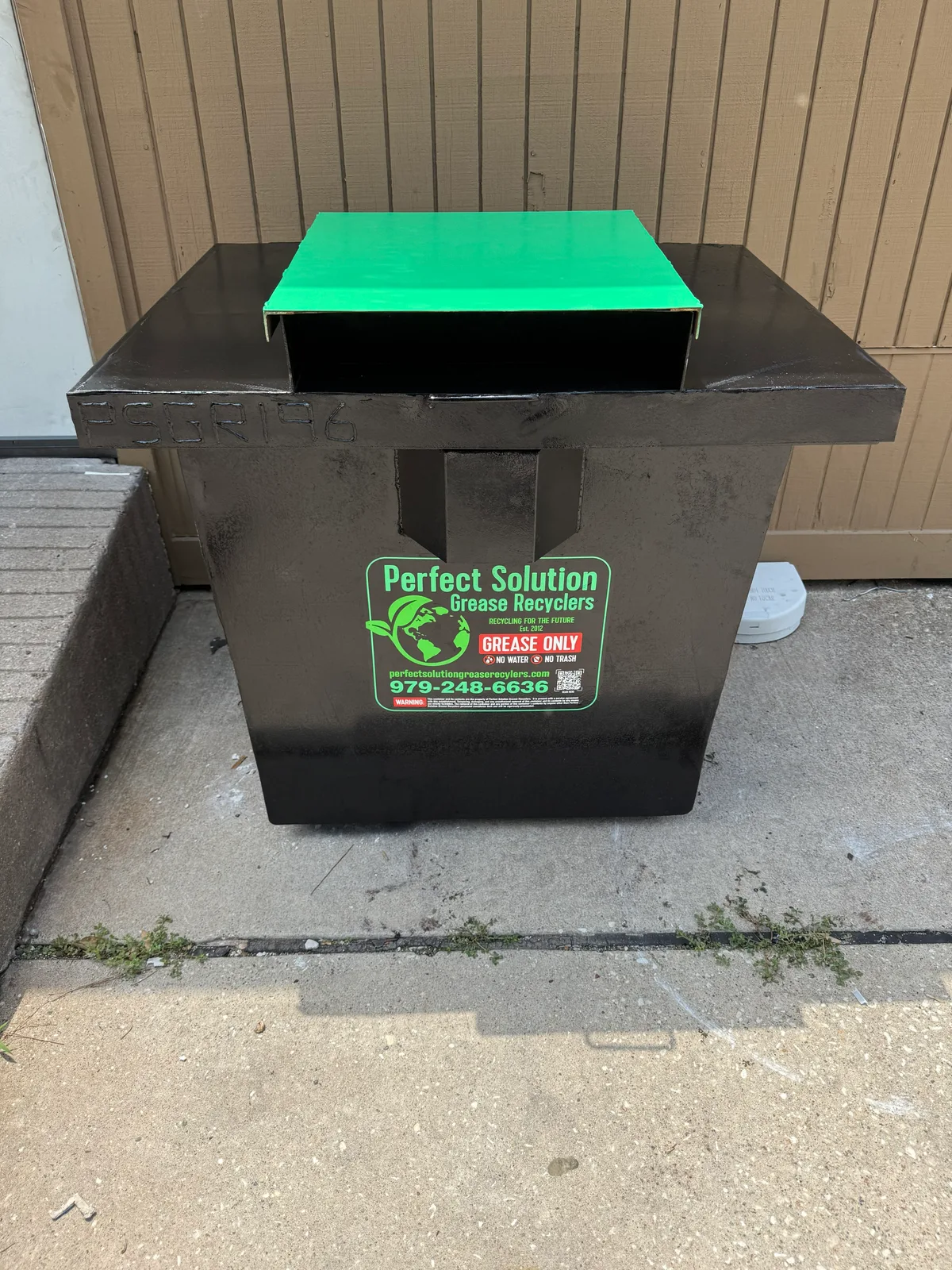
A provider delivers dedicated storage containers sized for your operation. These aren’t generic bins. They’re built to hold cooking oil safely, prevent spills, and integrate into your kitchen workflow without getting in the way.
Related: Dedicated Oil Storage Containers for Commercial Kitchens
On your scheduled pickup day, their team arrives, swaps your full container for an empty one, and handles all the heavy lifting. You’re not managing containers yourself. You’re not arranging last-minute pickups because something overflowed.
Good providers also show up on time. Not “sometime between 8 AM and 6 PM.” Actually on time, or close to it. Because your kitchen is busy and you can’t afford surprise delays.
The entire process is transparent. You know what you’re getting, when it’s happening, and how much you’re being paid for your oil. No hidden fees. No surprise charges buried in fine print.
Transparent Pricing and Fair Oil Payouts
One of the biggest frustrations with large waste management companies is the lack of clarity. You never really know what you’re paying for or whether you’re getting a fair deal on your oil.
Dependable providers work differently. They tell you upfront what the collection fee is (or if there isn’t one), what the current market rate is for your oil, and how often you’ll get paid.
Used cooking oil has real market value. Recycled oil gets processed into biodiesel, animal feed, and other products. Reputable collection services pay competitive rates based on current commodity prices, not whatever arbitrary number they decide on.
This matters especially if you’re a high-volume operation. A restaurant generating 100+ gallons a week could be looking at meaningful monthly payouts. That’s not small change.
Ask any potential provider for their current pricing and oil rates in writing. Compare services across your local area. You should feel confident that you’re being treated fairly and paid properly for the oil your kitchen produces.
Getting Started With Dependable Service
The first step is reaching out to a provider who knows your area and can do a quick assessment of your kitchen’s needs.
A good assessment includes questions about your fryer volume, storage space, current disposal method, and production consistency. They’ll ask whether you need containers delivered or if you already have suitable storage. They’ll want to understand your peak usage days and any operational constraints.
From that conversation, they’ll recommend a service plan that actually works for your kitchen, not a generic template.
Then installation is simple. Containers get delivered, you get trained on the basics (usually just making sure oil goes in the right place), and your scheduled pickups start. That’s it.
Perfect Solution Grease Recyclers handles all of this across Texas with the hands-on approach of a second-generation family business. They’re not faceless. They’re not processing you through an automated system. They actually know their customers and adjust service when you need it.
Why Local Matters More Than You’d Think

Choosing a local provider for cooking oil pickup is about more than just geography. It’s about responsiveness.
If a container leaks or there’s a scheduling issue, you can call someone who actually knows your kitchen and can fix it today, not next week. If your oil production spikes during a busy season, you can adjust your service quickly with someone who knows your operation.
Large regional waste companies optimize for efficiency and cost. That’s fine if you’re a commodity to them. But if you’re a restaurant owner managing thin margins and relying on your operations running smoothly, you want a provider who treats you like an actual customer, not an account number.
The best dependable cooking oil pickup service is one where the person picking up your oil knows your manager by name and actually cares whether your kitchen runs well.
Common Questions About Oil Pickup Services
How often should I schedule cooking oil pickup?
It depends entirely on your kitchen’s volume. Track how quickly your containers fill up over a typical week. If you’re reaching capacity in 5-7 days, weekly pickup makes sense. If it takes 10-14 days, biweekly works. The goal is never letting containers overflow while avoiding unnecessary service calls.
Do I need to filter my used cooking oil before pickup?
No. Professional collection services handle that. You just pour used oil into the designated container and let them manage the rest. Filtering is their job, not yours.
What if my oil production is inconsistent?
Tell your provider upfront. Good services offer flexible scheduling that adjusts to your actual needs. Some weeks you might need pickup. Other weeks you might not. A responsive provider works around that instead of forcing you into a rigid schedule.
How do I get paid for my used oil?
This varies by provider. Some pay monthly based on total volume collected. Others pay per pickup. Ask about payment frequency and method upfront. You should know whether you’re getting checks, direct deposit, or credit toward your service fees before you sign anything.