Opening a new restaurant in Texas means thinking about more than recipes and décor. Used cooking oil and grease need their own plan from the start. When you set up a clear restaurant grease pickup service before opening day, you avoid surprise problems and keep your kitchen running more smoothly.
In this guide, we walk through how to plan a smart grease pickup strategy tailored to new restaurants in Central and South Texas. We cover what to do before you open, how to size your containers, what to expect from a grease partner, and how to keep staff safe and inspectors happy.
Build a Grease Pickup Plan Before You Open Your Doors
Grease planning belongs on the same checklist as menu design, staffing, and health permits. If you wait until your fryers are already full, you are more likely to run into clogs, messy back alleys, or rushed last-minute vendors.
A clear plan before opening protects your grand opening from:
- Plumbing backups caused by grease going down drains
- Overflowing containers that attract pests and complaints
- Fire safety issues that catch an inspector’s eye
Texas openings around late summer and early fall have their own timing quirks. In August, you may be pushing through soft openings, staff training, and back-to-school crowds. The heat can make grease smell stronger and can speed up problems when containers are too small or not serviced often.
When you set up service early, you can:
- Lock in a pickup schedule before your fryers ever turn on
- Train staff on the exact process they will follow
- Show inspectors you already have a professional plan in place
Know Your Kitchen’s Grease Profile From Day One
Every concept has its own “grease profile.” A kitchen built around fryers has very different needs than a small bakery or coffee shop with light cooking.
Think through:
- How often will fryers run during a normal day?
- Are you serving a lot of fried items or just a few side dishes?
- Do you run breakfast, lunch, and dinner, or only certain dayparts?
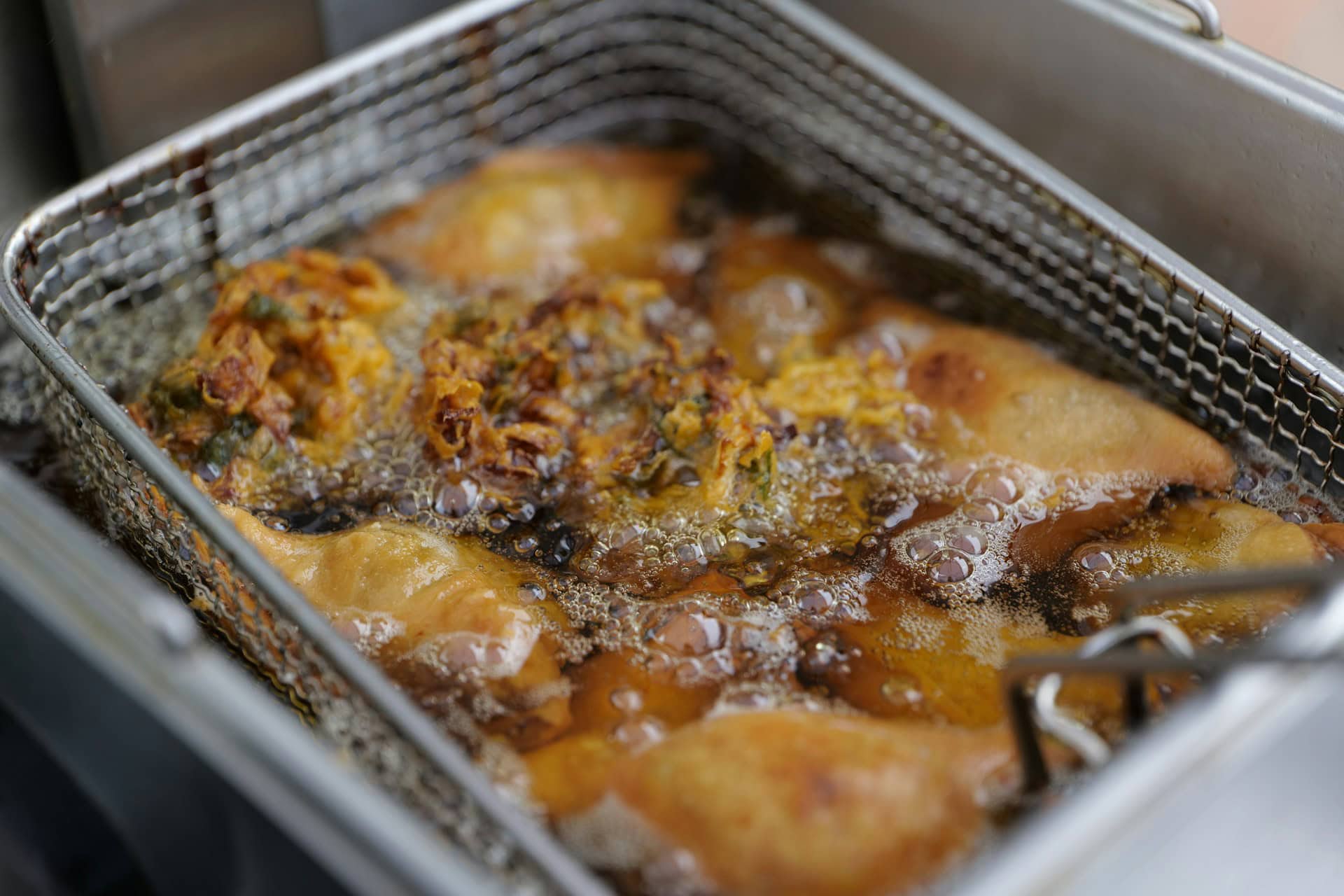
A fried chicken concept or heavy fast-casual setup usually creates a large amount of used cooking oil, which calls for larger containers and more frequent pickups. A small taco stand or bakery might need less volume but still needs a steady service plan.
Your layout also matters. Map where:
- Fryers and grills sit in relation to doors and grease storage
- Staff will carry hot oil to the container outside
- Hood systems and floor drains are placed
This helps you protect staff from slips and burns, keep workflows tight, and keep hot oil away from guests and walkways.
It is also important to understand local codes. Your grease profile affects:
- Fire safety rules for fryers and hoods
- Plumbing requirements to keep grease out of drains
- How health inspectors look at your storage and handling areas
When you match your setup to your grease output from day one, you make it easier to pass inspections and avoid costly fixes later.
Choosing a Reliable Restaurant Grease Pickup Service
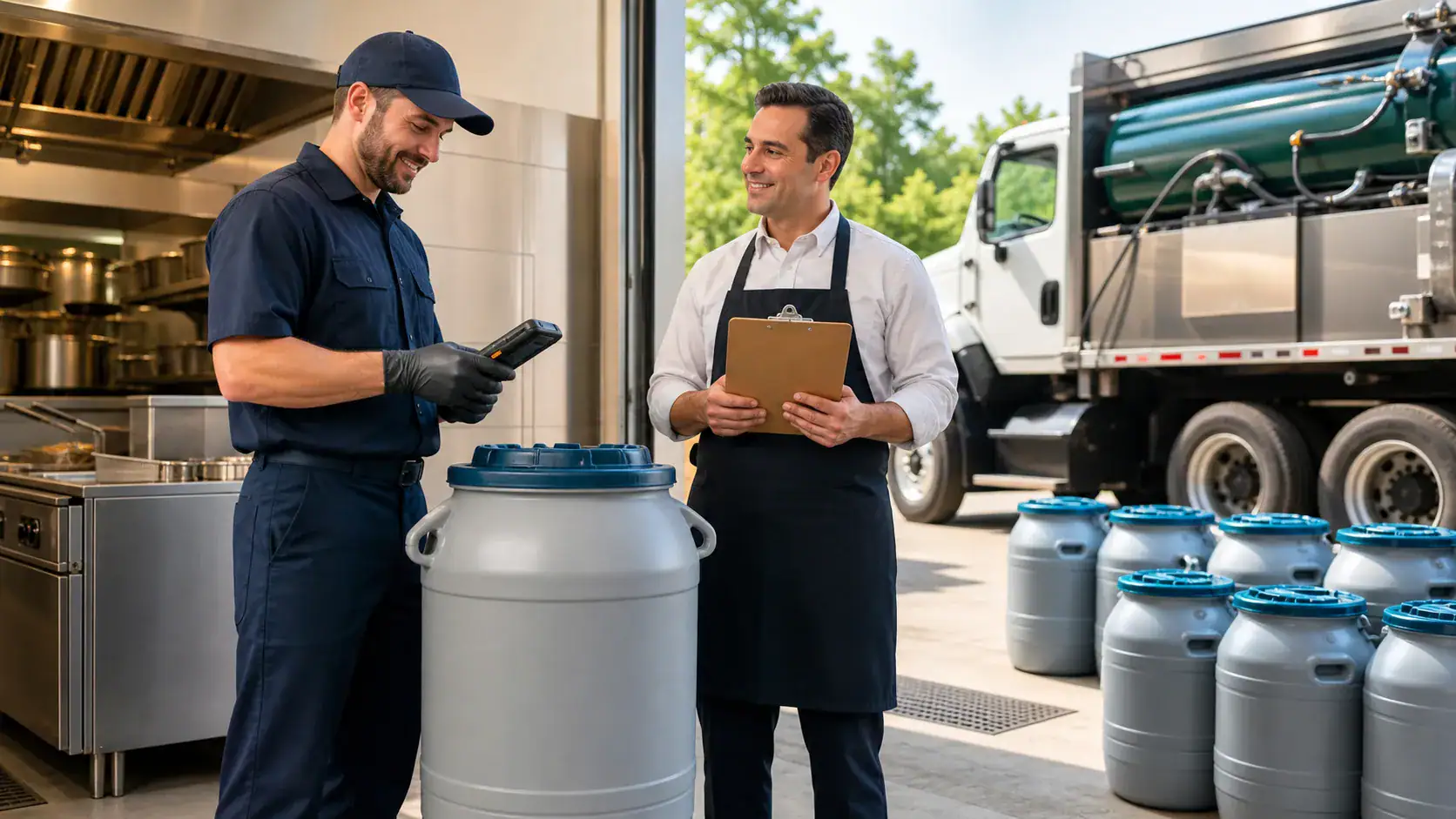
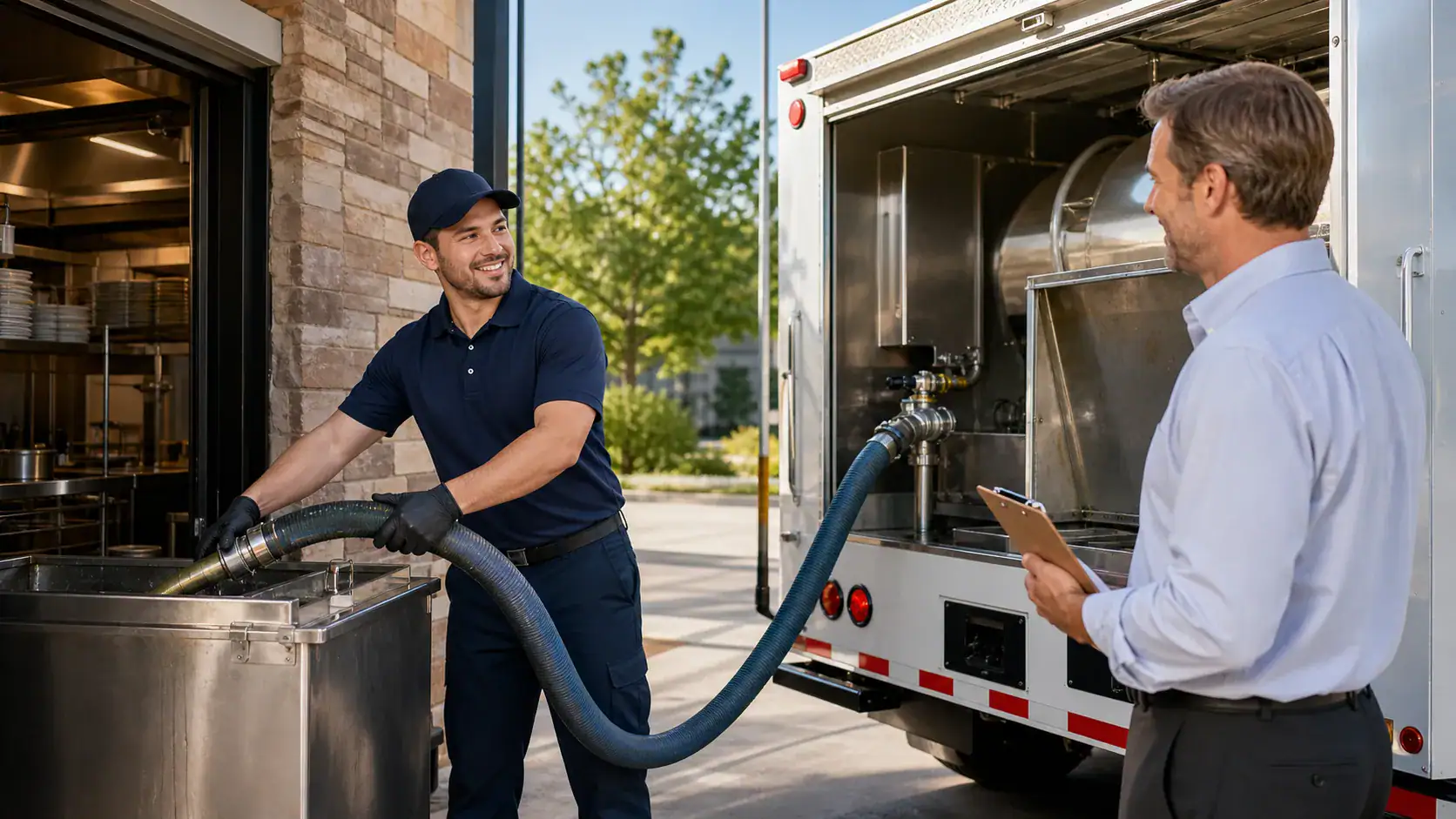
Once you understand your grease profile, it is time to choose a partner. A good restaurant grease pickup service should feel like part of your back-of-house support team, not just a truck that shows up sometimes.
Look for a company that has:
- Proper licensing and insurance
- Clear recycling practices for your used cooking oil
- Customer service that responds quickly, especially for new operators
You should feel comfortable asking direct questions, such as:
- How often can you pick up, and how flexible is that schedule?
- What container sizes and styles do you offer?
- How do you handle emergency overflows or surprise rushes?
- How are payouts calculated, and how do we track our volume?
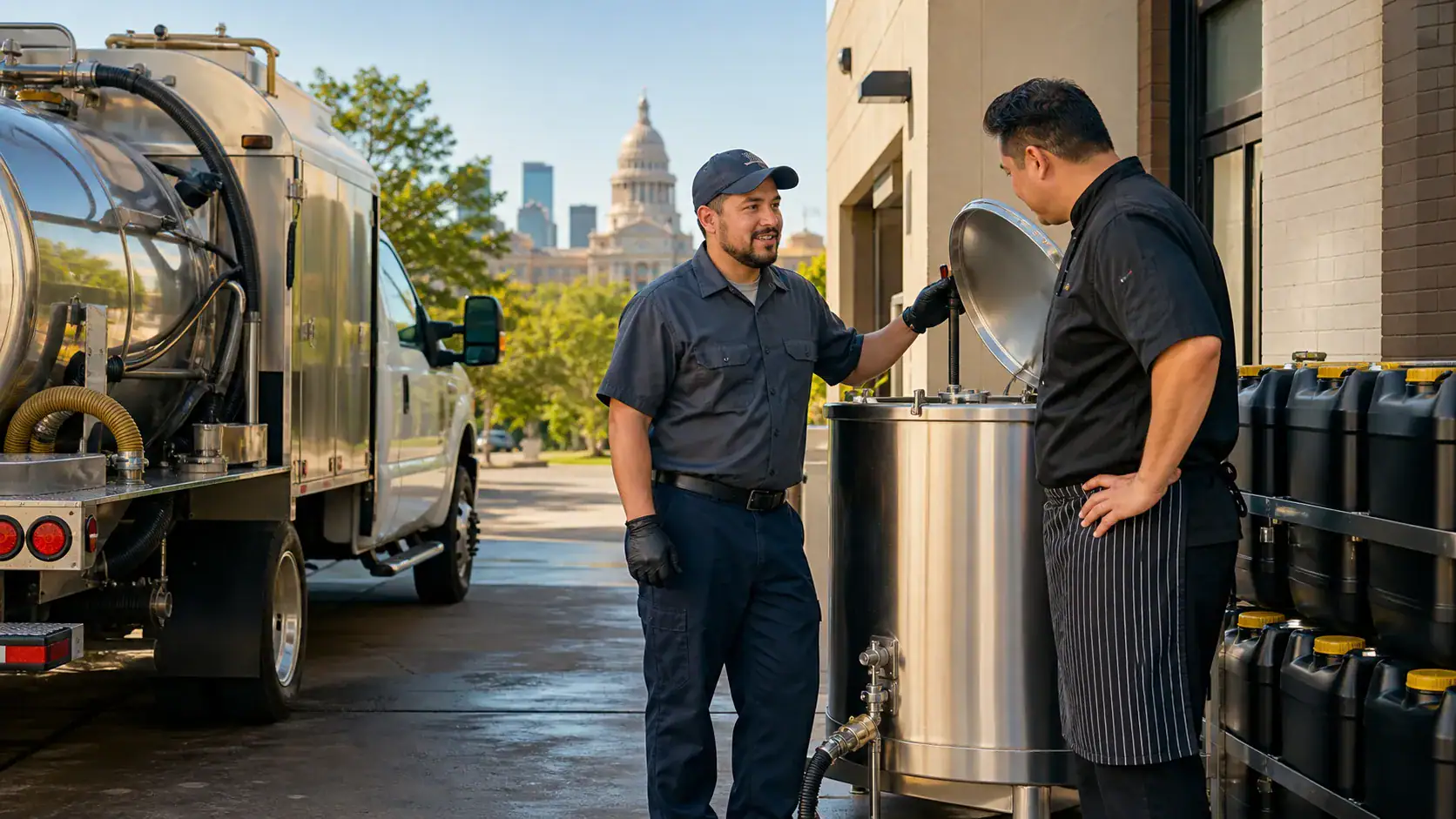
Working with a local Texas provider helps you get faster service when things change. When your restaurant is in Central or South Texas, you want a team that already knows the routes, traffic patterns, and local rules that affect pickup timing.
Scheduling Pickups That Match Texas Restaurant Seasons
Your first schedule will not be perfect, and that is okay. Plan an initial pickup schedule around:
- Test runs in your kitchen
- Soft openings with partial menus
- Your first few weeks of real service
Then review after 30 to 60 days. At that point, you will know your true oil output on busy and slow days, and you can adjust container size and pickup frequency.
Texas restaurants also see strong seasonal patterns. Think about:
- Summer tourism and family travel
- Football season and game-day crowds
- Holiday parties and catering periods
All of these can change your grease volume. A flexible restaurant grease pickup service should adjust quickly as:
- Your sales grow
- You add new menu items
- You expand your hours or open a second location
Planning for these shifts keeps you from dealing with overflowing containers in the middle of a busy weekend.
Protecting Your Investment with Smart Grease Practices
Even with a good pickup plan, daily habits make the real difference. Simple routines can protect your equipment and your staff while keeping your kitchen more comfortable.
Train staff to:
- Strain oil as needed to extend fryer life
- Wipe food particles into the trash, not the sink
- Never pour grease into floor drains or toilets
- Report leaks or spills right away
Safety is just as important. In Texas heat and frequent storms, staff should be careful when carrying hot oil outside:
- Use approved containers and tools
- Assign trained staff to oil handling tasks
- Avoid rushing during busy service
- Keep paths clear, dry, and well-lit
Clean, well-managed grease storage reduces pests, cuts down on odors, and keeps your back-of-house area more pleasant. It also sends a strong message during inspections that your team takes food safety and cleanliness seriously.
Turn Used Cooking Oil Into a Profit and Compliance Asset
Used cooking oil does not have to be a headache. With the right agreement, it can support your budget and your compliance efforts at the same time.
Focus on a recycling setup that offers:
- Fair, transparent payouts for your used cooking oil
- Clear records that show volumes and pickup dates
- Terms that match your concept and growth plans
Tracking your volume over time helps with planning. You can use those records to:
- Spot trends by season or menu change
- Build more accurate budgets for supplies
- Plan future locations using real data from your first kitchen
A strong partner can also help you keep your new Texas restaurant inspection-ready, simplify your grease handling, and support your sustainability goals. For new operators across Central and South Texas, Perfect Solution Grease Recyclers focuses on reliable collection, clear communication, and recycling that turns a messy problem into a managed system you can count on.
Protect Your Kitchen And Stay Code-Compliant Today
Keep your operation safe, efficient, and compliant by letting Perfect Solution Grease Recyclers handle your used cooking oil and grease. Our reliable restaurant grease pickup service helps prevent clogged lines, unexpected downtime, and costly fines. Reach out today through our contact page so we can schedule a pickup that fits your kitchen’s workflow.