Why Food Truck Grease Pickup Looks Different in Houston and Austin
Food truck season in Texas hits a high point in the fall. Football games, festivals, school events, and outdoor markets crowd the calendar. For most mobile kitchens, this is when lines get longer, hours stretch later, and fryers never get a break. That also means more used cooking oil piling up faster than usual.
Food truck grease pickup may sound simple, like someone shows up and takes the oil. In real life, it is not that easy, especially when you compare how things work in Houston and in Austin. Different city layouts, traffic patterns, and rules can change everything about how and when your grease gets picked up. In this post, we look at how local rules, roads, and events shape your service, and how to build a city-specific plan before the fall rush hits.
How Local Rules Shape Your Grease Pickup Routine
Both Houston and Austin keep a close eye on food trucks, but they do it in their own ways. Each city has its own system for permits, inspections, and where mobile kitchens can park. Those rules affect where you can put your grease container, how your collector gets to it, and what inspectors expect to see.
Some common rule areas that matter for food truck grease pickup include:
- Where trucks can legally operate, like designated food truck parks, private lots, or approved street zones
- How used cooking oil must be stored so it does not leak or draw pests
- What kind of lids, locks, or covers are required on containers
- How spills must be handled and cleaned up
- What records or receipts inspectors may ask to review
In both cities, inspectors want to see that your used cooking oil is contained, labeled, and not turning into a slip hazard or a mess near drains. If your container is in the wrong spot, blocks a fire lane, or is missing a lid, you could be asked to move it on short notice. That can throw your whole service plan off.
Working with a used cooking oil collector that understands local city and county rules in Central and South Texas helps you:
- Place containers where trucks can reach them without breaking parking rules
- Avoid last-minute shuffling on inspection day
- Keep clear documentation of pickups and volumes
That way, grease is one less thing to worry about when the health inspector shows up during a busy lunch rush.
Houston’s Sprawl and Storms Change Pickup Timing
Houston spreads out far in every direction. Food trucks might be at a downtown lunch spot, a suburban brewery at night, then a stadium lot on the weekend. Add heavy freeway traffic, road construction, and storm-related flooding, and it is easy to see why timing matters so much.
These local realities affect food truck grease pickup in a few key ways:
- Longer drive times mean pickup windows need to be flexible
- Highways and feeder roads can back up fast around rush hour and big games
- Storms and heavy rain can close certain streets or lots with little warning
For Houston trucks, planning ahead is your best friend. A few smart habits help keep service steady, even when the roads do not cooperate:
- Choose container sizes that match your busiest weeks so you are not overflowing if a pickup is delayed
- Plan service days around your largest events, like night markets or stadium dates, so tanks start empty before big crowds
- Build in extra pickups during fall football season and holiday catering jobs when fryers stay on longer
A good collector will plan routes around common choke points and watch the weather so your oil still gets picked up even when the city feels like a parking lot.
Austin’s Events and Tight Streets Require Precision
Austin food trucks face a different set of challenges. The downtown core is dense, streets can be narrow, and parking is limited. During big festivals, UT home games, or concerts, access for service trucks can shrink even more.
All of this changes how and when grease pickup should happen:
- Off-peak collections are often safer and less disruptive
- Property managers and park owners may set specific hours for service vehicles
- Containers must sit where a truck can reach them without blocking tiny driveways or crowded sidewalks
Fall brings more people to outdoor spaces like breweries, food truck parks, and live music venues. That means more fries, more wings, and more used cooking oil filling up faster from September through the holiday season.
Austin trucks can stay ahead by:
- Scheduling pickups outside of major event windows when streets are packed
- Working with landlords or lot owners so containers sit in service-friendly spots
- Increasing pickup frequency during the fall so containers do not spill over when foot traffic jumps
The more precise your plan is around Austin’s busy calendar, the less likely you are to juggle oil at midnight after a long service.
Choosing Grease Containers That Travel with Your Business
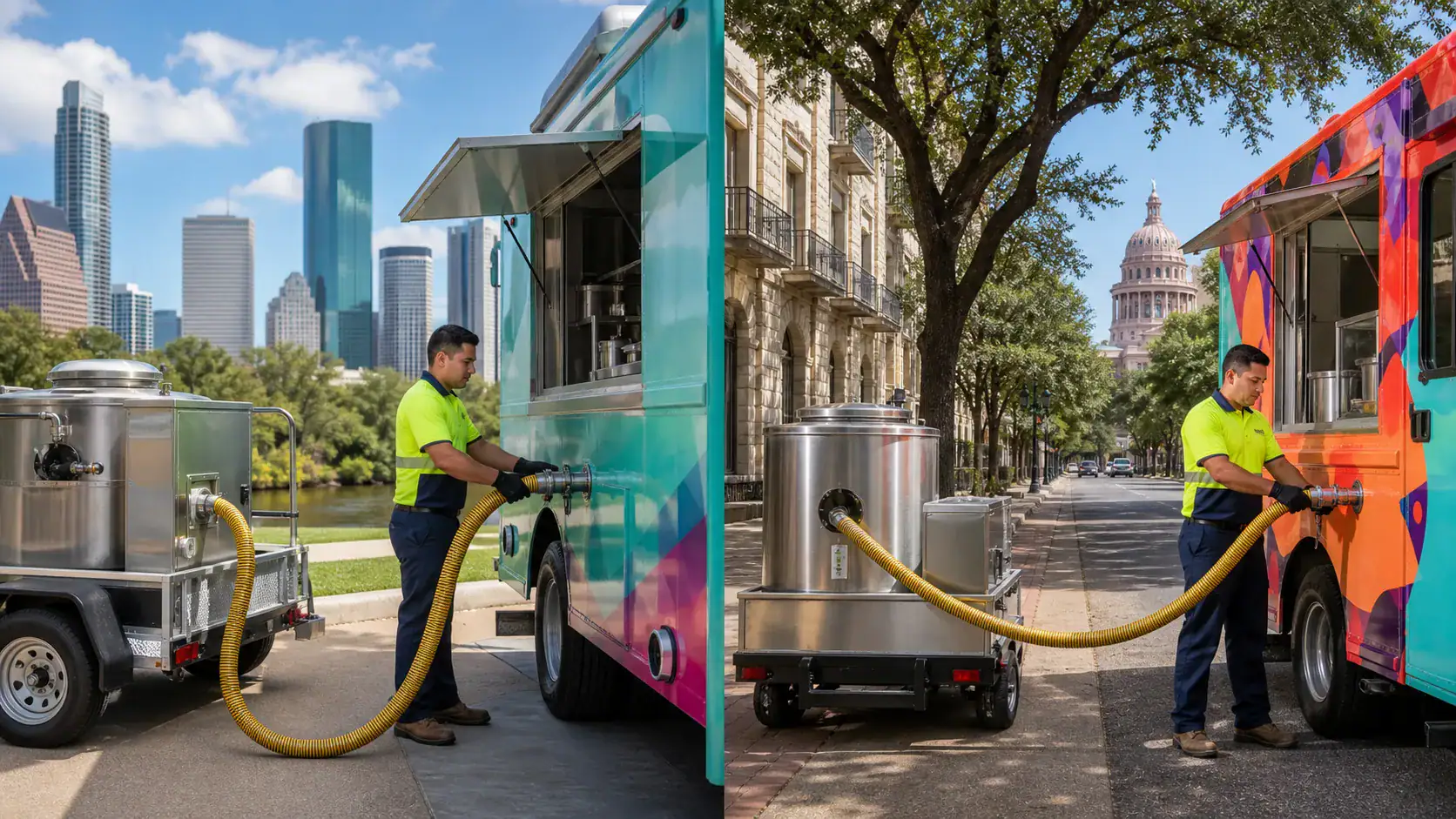
Not every food truck handles grease the same way. Some park at a commissary or shared lot each night and pour used cooking oil into a stationary container. Others are truly mobile and may need compact solutions that fit the way they move across the city.
There are two main setups to think about:
- Stationary on-site containers at a commissary, food truck park, or shared kitchen lot
- Smaller or mobile collection options that work better for trucks that change locations often
Houston trucks that crisscross a wide metro area might use a mix of setups. For example, a main container at a commissary plus smaller containers at a regular weekly spot. Austin trucks that stay mostly in one park or at recurring events may only need a single, well-placed container that a collection truck can reach without blocking a tight drive.
A smart grease partner helps match container type and placement to:
- Your average oil volume on regular days and busy days
- Your route pattern and how often you move
- The rules and physical layout in your specific city
That way, drivers can collect your oil quickly, without blocking traffic, customer lines, or neighboring vendors.
Turn City Differences Into a Stronger Fall Service Plan
Houston and Austin may share a lot of things, including love for food trucks, but they play by different rules when it comes to roads, events, and daily traffic. A one-size-fits-all approach to food truck grease pickup usually leads to last-minute calls, full containers, or tense talks with inspectors. When your plan fits your city, service is smoother and stress stays lower.
As you get ready for the busy fall season, it helps to walk through a simple checklist:
- Confirm your permits and current rules for used cooking oil storage
- Review your event calendar, including stadium days, festivals, and markets
- Adjust container size and pickup frequency for the months with higher fryer use
- Set a backup plan for storms, road closures, or major event weekends
Perfect Solution Grease Recyclers focuses on Central and South Texas, so we pay close attention to how each city works. By building a grease pickup plan that fits both your truck and your town, you can roll into fall focused on cooking great food, while your used cooking oil gets handled safely, cleanly, and on time.
Keep Your Food Truck Running Clean And Compliant
Let Perfect Solution Grease Recyclers handle your food truck grease pickup so you can stay focused on serving customers. We provide reliable, scheduled service that keeps your operation clean, safe, and up to code. If you are ready to streamline waste handling and avoid costly problems, reach out through our contact page, and we will help you set up a pickup plan that fits your schedule.