Find the right grease container for your kitchen. Learn about small, medium, and large capacities (200-400 gallons) to match your volume.
When you’re running a restaurant or commercial kitchen, picking the right grease collection container isn’t just about having a place to dump used oil. It’s about matching your actual output to a container that won’t overflow one week and sit half-empty the next. Let’s walk through your grease collection container sizes and options so you can stop guessing and start storing smartly.
Why Container Size Actually Matters
The wrong container size creates real problems. Too small, and you’re dealing with overflow, spills, and safety hazards. Too large, and you’re wasting space in an already tight kitchen while paying for storage you don’t need.
Your container needs to match your kitchen’s actual grease production. A sandwich shop produces way less grease than a full-service steakhouse. A breakfast-only diner has different needs than a place running lunch and dinner service.
Related: Grease Container Installation for New Restaurants: Setup Guide
Getting this right means fewer pickups, better workflow, and a cleaner kitchen. Perfect Solution Grease Recyclers helps you figure out what works for your operation, not what works for some generic template.
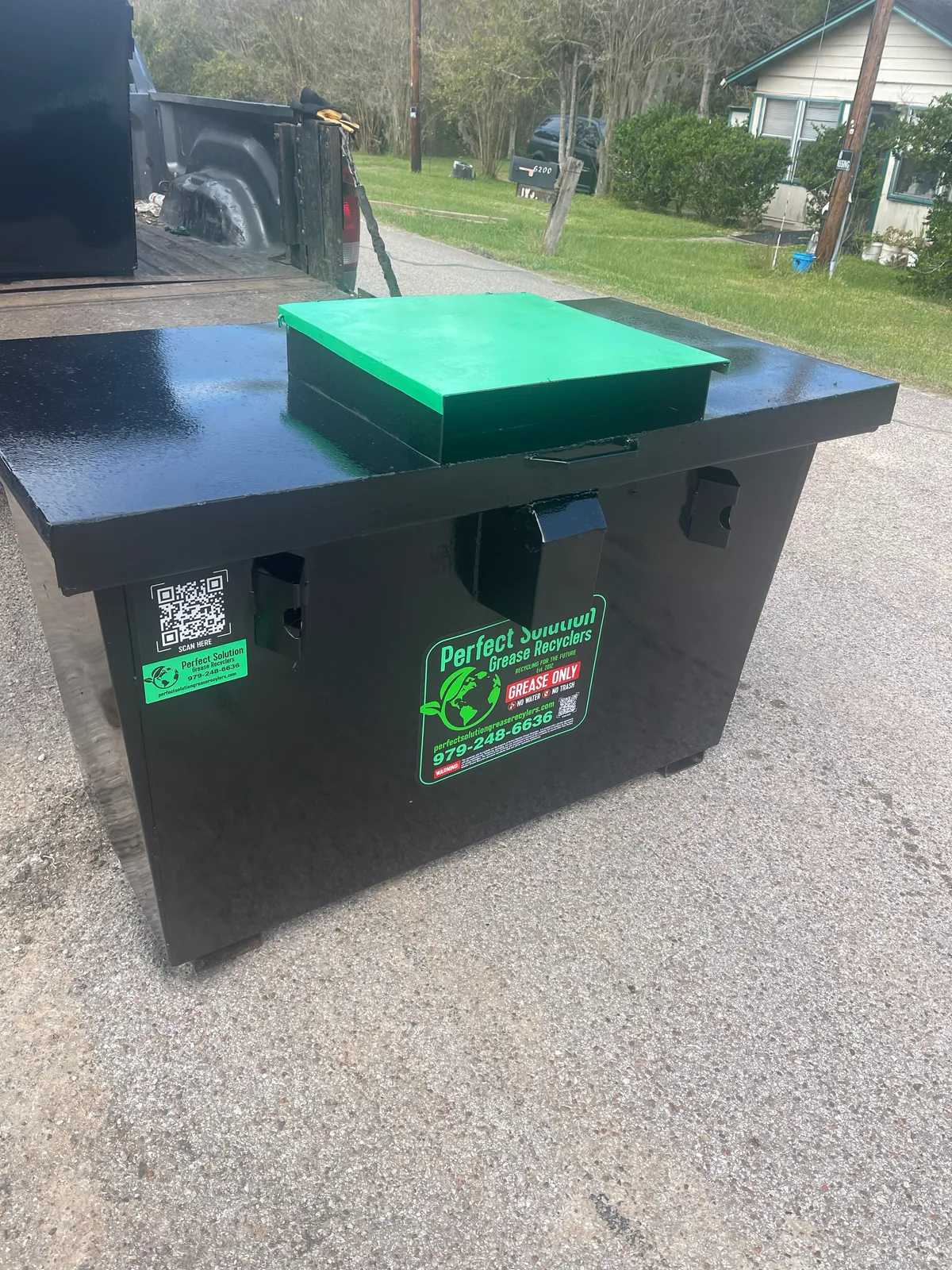
Small Grease Containers (2x3x3 Dimensions)
Small containers are built for low-volume operations. Think sandwich shops, donut shops, or small cafes that fry maybe a few times a week or produce minimal grease.
These compact units save floor space and are easy to access. They’re perfect when grease production is light and you don’t need daily or even weekly pickups. The downside: they fill up fast if you underestimated your volume, so make sure you’re honest about how much you actually fry.
Medium Grease Containers (200-300 Gallons)
Medium containers hit the sweet spot for most traditional restaurants. You’ve got two solid options here: the 200-gallon mid-size and the 300-gallon standard capacity.
The 200-gallon container works well for restaurants that produce a steady but moderate amount of grease. You’re looking at dimensions that fit most kitchen layouts without dominating your space. It’s the “Goldilocks” choice for a lot of food service businesses.
Related: Grease Collection Service for Small Restaurants in Austin
The 300-gallon standard capacity container is the most common size across the industry. With dimensions of 60 inches wide by 43 inches deep at the top and 53 inches by 32 inches at the base, standing 36 inches tall, it’s designed to handle regular commercial kitchen output without becoming a bottleneck.
Both medium options feature raised lids that make grease disposal easy and quick. They’re built from durable steel that stays functional year after year. The leak-proof design keeps your kitchen clean and safe.
Large Grease Containers (400 Gallons)

If you’re running a high-volume operation, a 400-gallon extra-large container is your answer. Think busy casual dining chains, heavy-volume quick-service restaurants, or multi-station kitchens where grease production is serious.
Related: Grease Collection Alternatives to Large Waste Companies
Related: Grease Recycling Container Sizes for Restaurants
Related: Grease Recycling Container Delivery for Texas Restaurants
These containers handle maximum capacity without requiring frequent pickups. You get durability, secure handling, and room to breathe operationally. The trade-off is footprint. You need space to accommodate a larger unit, but if you’re producing that much grease, you’ve got the kitchen to support it.
Container Features That Matter
Size is just the starting point. What your container is made of and how it’s built affects everything from safety to longevity.
Steel construction is the standard because it’s tough, reliable, and handles the weight and temperature of used grease without breaking down. You want material that resists rust and keeps performing year after year.
A leak-proof design is non-negotiable. Grease spills create slip hazards, stain your kitchen floor, and can lead to drainage problems. Proper sealing and a well-designed bottom prevent leaks before they happen.
Raised lids matter more than you’d think. They make the actual process of disposing grease faster and safer. No awkward pouring angles or splashing. Just lift and go.
How to Choose Your Container Size
Start by honestly assessing your grease volume. How many times a week do you fry? How many fryers run during peak service? What’s your menu?
A 24-hour diner frying breakfast, lunch, and dinner needs a different container than a pizza place that fries appetizers only during dinner service.
Talk to your current waste management provider about pickup frequency and volume. That data tells you what you’re actually producing.
Then pick a container that gets picked up before it fills up, not after. You want a safety margin. Running to full capacity every single time increases the risk of overflow, and overflow costs you time and creates mess.
If you’re unsure, go slightly larger than you think you need. The extra space is cheaper than the problems that come with overflow.
Making the Switch

If you’re currently using the wrong size container, switching is straightforward. Perfect Solution Grease Recyclers handles the logistics. They deliver and install the right container for your operation, manage scheduled pickups based on your actual volume, and make sure you’re set up for success.
The goal is a system that works for you, not a system you have to work around.
Common Questions About Grease Container Sizes
Can I upgrade or downgrade my container size later?
Yes. Your grease production changes as your business grows or your menu evolves. You can adjust container size with your service provider. It’s not a permanent decision.
What happens if my container overflows?
Overflow creates spills, safety hazards, and drainage issues. It also disrupts your workflow because grease has nowhere to go. That’s why matching size to volume is so important. Pick a container that gets picked up before it reaches maximum capacity.
Do larger containers cost significantly more to maintain?
Storage space and pickup frequency affect your total cost more than container size does. A larger container picked up less often might actually be more efficient than a small container picked up multiple times weekly. Ask for a quote based on your actual volume and pickup schedule.
What if my kitchen space is tight?
That’s a real constraint. Work with your service provider to find a container that fits your footprint. Sometimes a medium container placed strategically works better than forcing a larger unit into an awkward spot. Space and workflow matter as much as capacity.