Recycling used cooking oil beats disposal every time. Learn why restaurants profit from proper oil collection instead of throwing it away.
Here’s the straight answer: recycling your used cooking oil makes you money. Throwing it away or pouring it down the drain costs you money and headaches. We’re talking about the difference between running a smart operation and bleeding cash every single day.
If you run a restaurant, food truck, or any commercial kitchen in Texas, your used cooking oil is not waste. It’s an asset. But only if you handle it the right way.
Why Disposal Is Costing You More Than You Think
Let’s start with what happens when you treat used cooking oil like regular trash.
First, there’s the immediate problem: disposal services charge you to haul it away. You’re paying someone to remove something that has actual value. That’s backwards.
Second, improper disposal creates hidden costs. When grease goes down your drain, it doesn’t just disappear. It clogs your pipes, and suddenly you’re calling a plumber at 2 p.m. on a Friday because your kitchen sink is backing up. Emergency plumbing calls aren’t cheap, and they pull your attention away from running your business.
Third, municipalities fine businesses for improper oil disposal. If your used oil ends up in the municipal sewer system, you’re looking at regulatory penalties that can add up fast. No business owner wants that surprise bill.
Fourth, there’s the environmental impact on your reputation. Customers increasingly care where their favorite restaurants stand on waste and sustainability. Proper handling matters to them, even if you never mention it.
How Recycling Actually Works (And Why It Pays)
Recycling used cooking oil is straightforward. A professional collection service picks up your oil on a regular schedule and pays you for it. That’s the basic model, and it flips the entire equation.
Related: How Often Should Restaurants Collect Used Cooking Oil?
Related: San Antonio Used Cooking Oil Removal & Recycling Guide
Instead of paying to dispose of waste, you’re receiving payment for a resource. Your used oil gets converted into biodiesel, animal feed, soap, and other valuable products. The market for recycled cooking oil is real and stable, which is why companies are willing to pay for it.
The best part? You don’t need to do any of the heavy lifting. A professional collection service like Perfect Solution Grease Recyclers handles everything: they deliver and install storage containers, manage scheduled pickups based on how much oil you generate, and handle all the logistics. Your job is to keep cooking.
Related: Schedule a Used Cooking Oil Pickup in Texas: Your Complete Guide
Related: Used Cooking Oil Pickup Schedule Options in Texas
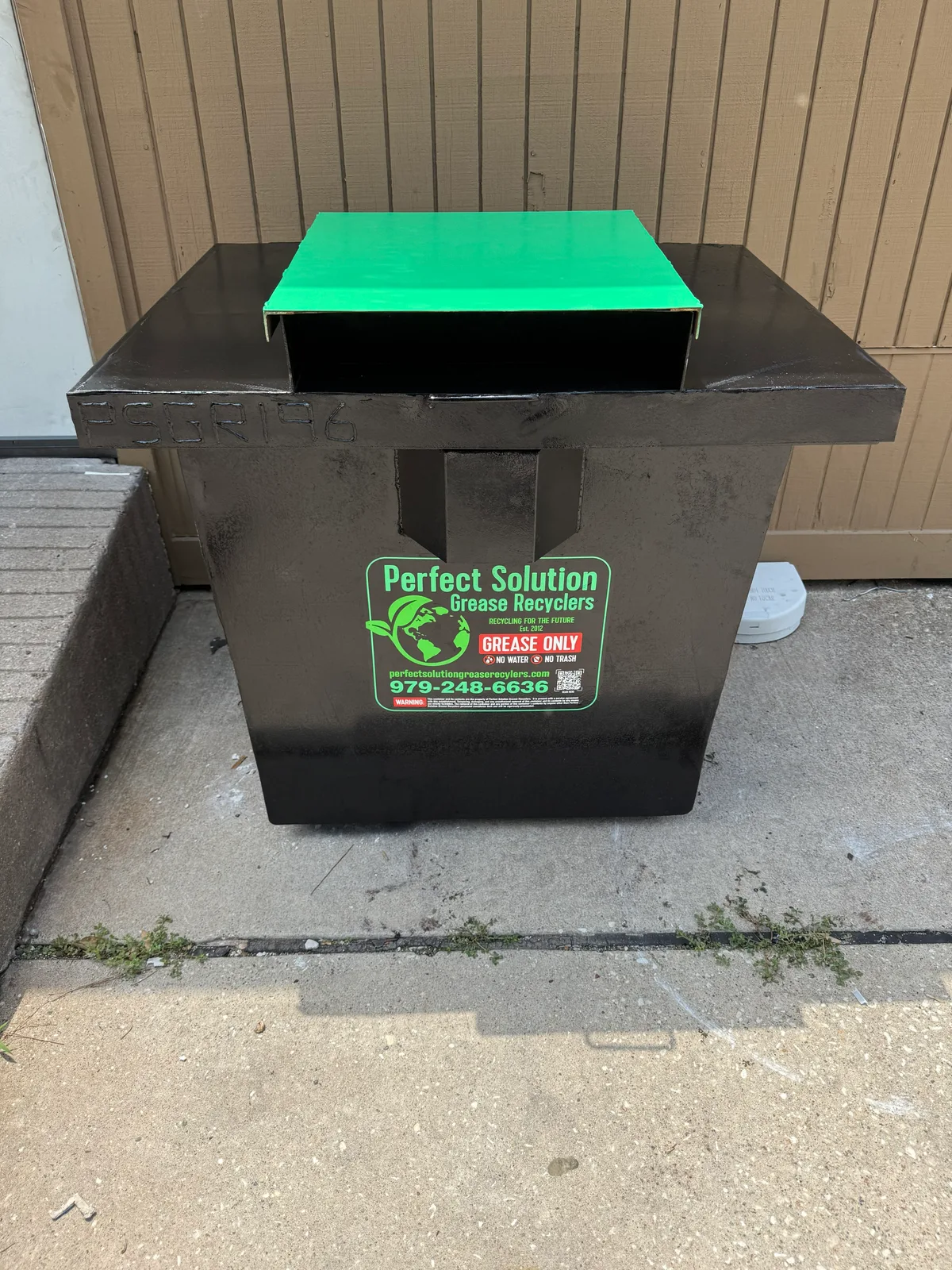
You also eliminate the drain-clog problem entirely. When your oil is stored in a dedicated container and picked up regularly, it never enters your plumbing system. No emergency calls. No surprises.
The Financial Comparison: Disposal vs. Recycling
Let’s break down the money side.
With traditional disposal, you’re paying out of pocket. Every gallon has a cost. Over the course of a month or year, those costs stack up, especially for busy kitchens that generate 10, 20, or 50 gallons per week.
With recycling, you’re receiving payment. The amount varies based on market rates and the volume you produce, but you’re on the receiving end of the transaction. For kitchens that run every day, that’s a real income stream. Some restaurants see enough volume to make a meaningful difference to their bottom line.
Beyond the direct payment, recycling saves you the indirect costs: no plumbing emergencies, no regulatory fines, and no wasted time dealing with disposal logistics.
When you add it all together, recycling isn’t just better for the environment. It’s better for your wallet.
What Makes a Good Recycling Partner

Not all collection services are equal. Here’s what to look for.
First, reliability. You need someone who shows up on schedule. If your container fills up and nobody picks it up, you’ve got a problem. A partner who understands your volume and adjusts pickup frequency accordingly keeps your operation running smoothly.
Second, fair pricing. The market rate for used cooking oil fluctuates, but a good partner communicates openly about how much you’ll receive and why. No surprises, no hidden fees.
Third, professional handling. Your oil needs to be stored in proper containers, transported safely, and processed correctly. This isn’t just about compliance (though that matters). It’s about making sure your oil actually gets recycled instead of improperly disposed of.
Fourth, personal service. You want to work with someone who treats your business like it matters, not like you’re just a line item on their route. A company that listens to your needs and adjusts accordingly makes the whole process easier.
If you’re looking to move away from disposal and start profiting from your oil, Perfect Solution Grease Recyclers provides exactly this kind of service across Texas. They deliver containers, manage scheduled pickups, and pay competitive rates based on what your kitchen generates.
The Sustainability Angle (And Why It Matters to Your Business)
Here’s something worth considering: your customers notice. More and more people care about where their food comes from and how restaurants handle their waste. Recycling your used cooking oil isn’t just the right thing to do. It’s also smart business.
Related: Used Cooking Oil Recycling Containers for Restaurants
When you recycle, your oil becomes a resource instead of a problem. It gets turned into biodiesel, which reduces dependence on fossil fuels. It gets processed into animal feed or soap. It gets used again, instead of taking up space in a landfill or contaminating the sewer system.
That story is worth telling. It’s honest, it’s easy to understand, and it builds loyalty with customers who care about sustainability.
Getting Started: What You Need to Do
If disposal is currently your method and you want to switch to recycling, the barrier to entry is basically zero. You don’t need to buy equipment. You don’t need to learn a new process.
You just need to reach out to a recycling service, discuss your volume, and set up a pickup schedule. They handle the rest.
The sooner you make the switch, the sooner you stop paying to get rid of something valuable and start getting paid for it. For most kitchens, that shift happens within a single conversation.
Making the Transition

If you’ve been disposing of your oil through a general waste management company, switching to a dedicated recycling partner is simple. Most services can coordinate with your existing waste removal to prevent overlap or confusion.
You’ll get dedicated storage containers that fit your kitchen’s space and your oil volume. Pickups happen on a schedule that works for you, whether that’s weekly, bi-weekly, or based on a call when your container is full. Everything is transparent and predictable.
The whole transition takes a phone call and maybe 30 minutes of coordination. There’s no paperwork burden, no compliance nightmare, and no learning curve on your end.
When you’re ready to stop paying for disposal and start profiting from recycling, Perfect Solution Grease Recyclers can walk you through exactly what to expect and get your operation set up.
The Bottom Line
Disposal is a cost center. Recycling is a profit center. That’s the core difference.
You’re running a kitchen, not a waste management operation. Every hour and every dollar you spend on oil disposal is time and money you’re not spending on your actual business. Every regulatory headache and plumbing emergency is a distraction you don’t need.
Recycling removes all of that. It’s simpler, it pays you instead of costing you, and it keeps your operation compliant and your reputation clean.
For restaurants and commercial kitchens across Texas that are serious about efficiency and profitability, recycling used cooking oil isn’t an option anymore. It’s the default.
Is recycling used cooking oil worth it for small restaurants?
Yes. Even if you only generate a few gallons per week, recycling removes the disposal cost and the plumbing risk. You’re also building a sustainable practice that customers notice. For small operations, the real value is in avoiding emergency repairs and regulatory fines, not just the payment you receive.
How often will my oil get picked up?
That depends on your volume. A busy restaurant might need weekly pickups, while a slower operation might go two weeks. A good recycling partner adjusts the schedule based on how fast your container fills up. You never have to call and beg for a pickup.
What if I have very little used cooking oil?
Most recycling services have a minimum volume or container size, but it’s usually low enough that even small kitchens qualify. If you’re on the fence about volume, reach out and ask. A service like Perfect Solution Grease Recyclers can tell you whether your operation is a good fit based on how much oil you actually generate.
Can I mix different types of oil, or does it need to be separated?
Most recycling services accept all types of used cooking oil in the same container: vegetable oil, peanut oil, canola oil, and blended oils all go together. The recycler handles separation and processing on their end. Just keep water and food debris out of the container, and you’re good.